
Our Mission

Our Mission
At BPAUK, we are dedicated to promoting the safety and integrity of drinking water through education and advocacy. Our mission is to provide industry-leading access to training on cross-connection control and backflow prevention, ensuring communities are protected from water contamination. We aim to be a trusted resource for water safety professionals across the UK.
Containment as part of a cross-connection control policy
Information article
Containment backflow protection primarily protects the public water supply from contamination originating within a building or facility.
Purpose and Function
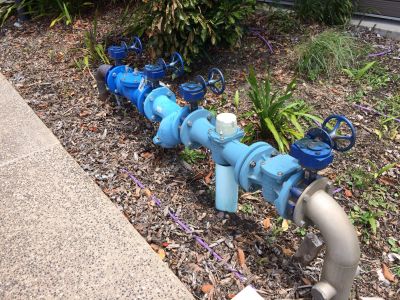
Containment backflow protection, also known as point-of-service protection or boundary protection, is installed at the service connection where a building’s plumbing meets the public water system. Its main function is to prevent contaminants from the customer’s plumbing system from entering the public water distribution system in the event of backflow caused by pressure changes or siphoning. This ensures that hazardous substances, chemicals, or pollutants within a facility do not compromise the safety of the broader water supply.
Scope and Limitations
While containment protection safeguards the public water system, it does not protect the water inside the building or the occupants from contamination. Any backflow incident within the building can still pose a risk to people using the internal plumbing. For this reason, containment protection is considered one layer of a comprehensive cross-connection control program, with internal protection addressing hazards at individual fixtures, appliances, and internal systems.
Installation and Application
Containment assemblies are typically installed immediately downstream of the public service connection, usually at the water meter and upstream of any branches in the building’s plumbing. They are commonly used in commercial, industrial, and high-risk facilities where hazardous materials may be present. The installation is generally straightforward, and annual testing is required to ensure proper function. Modern systems may include sensors for real-time monitoring to detect potential failures.
Key Takeaways
- Protects: Public water system from contamination originating inside a building.
- Does not protect: Building occupants or internal plumbing from backflow hazards.
- Complementary measures: Internal protection is needed for comprehensive internal safety.
- Maintenance: Regular inspection and testing are essential to maintain effectiveness.
Containment backflow protection is a critical safeguard for public health, ensuring that even if a backflow event occurs within a facility, the municipal public water supply remains uncontaminated.